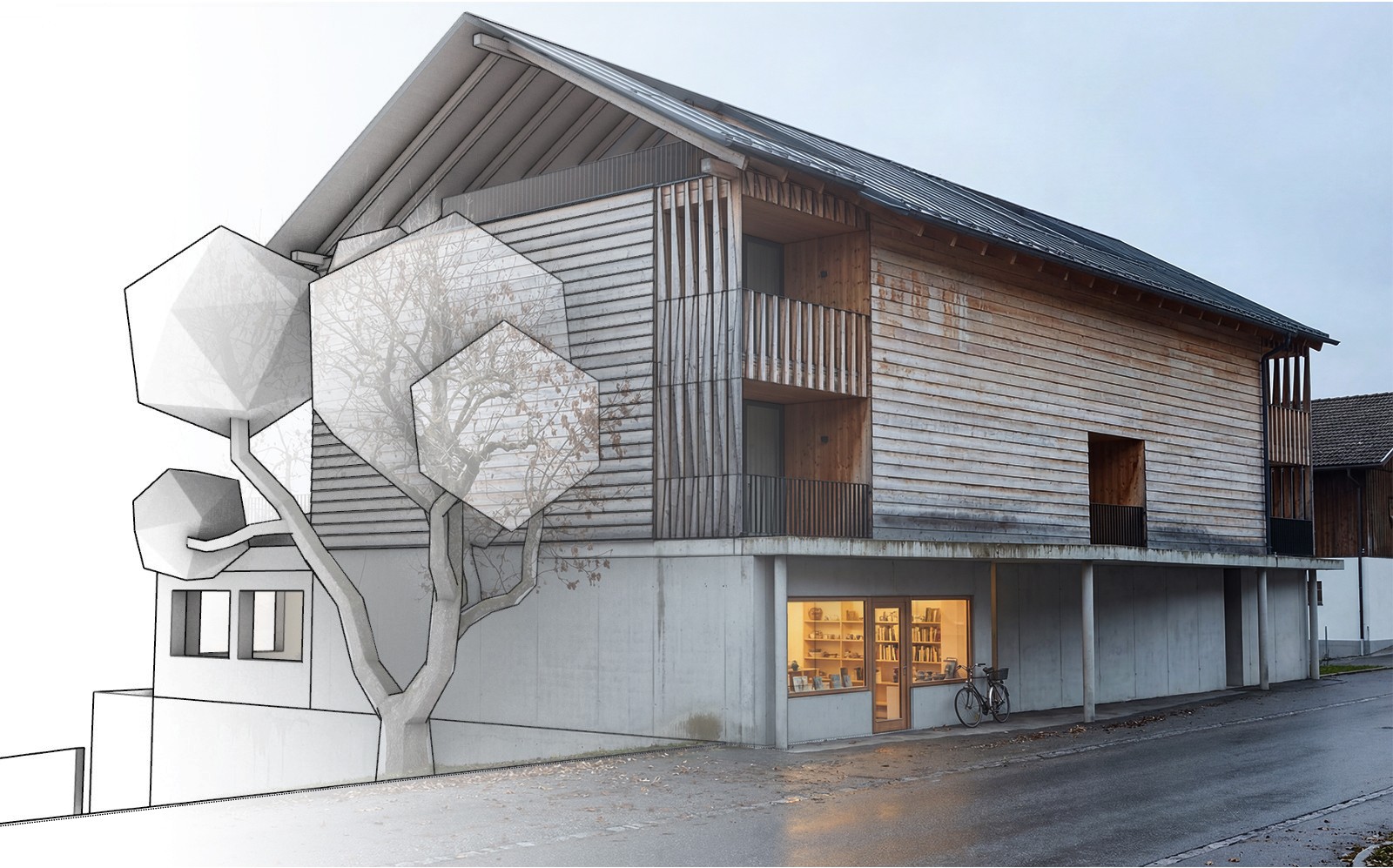
What we found on site was a peculiar emptiness. If the cemetery hadn’t been within sight, you might have assumed that this wasteland - strewn with collapsing huts, felled trees, and cut stumps - was the real field of the dead.
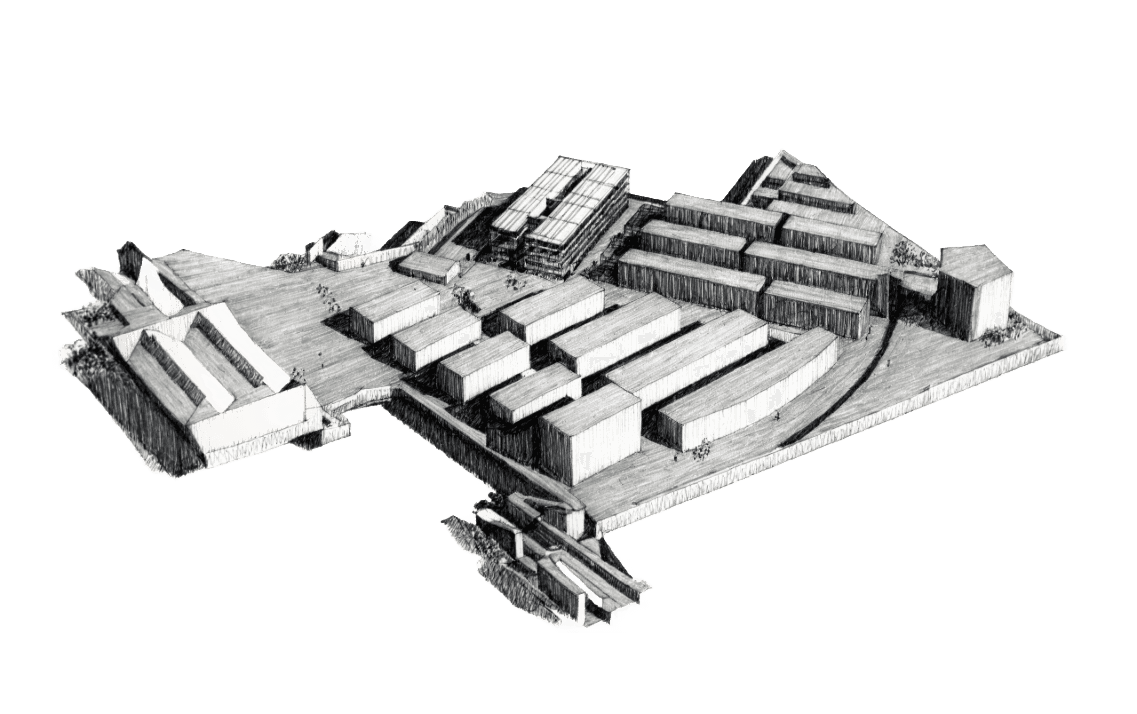
“Everything has to go,” says remediation. And so a century of vegetation and topography is erased. What remains is a deep void: encircled by railway lines, graves, and tram sidings, held in place by a wall that is shy yet unmistakable. But this void is not only an abyss. It is the beginning of a future landscape - one of countless urban fragments exposed to rapid, relentless change.
But what if we paused the usual routine of digging a hole and flattening it again? What if we interrupted the cycle - just for a moment? What if this new topography were allowed to define the site’s destiny, and the hole were accepted as a given, not merely a condition to be corrected?
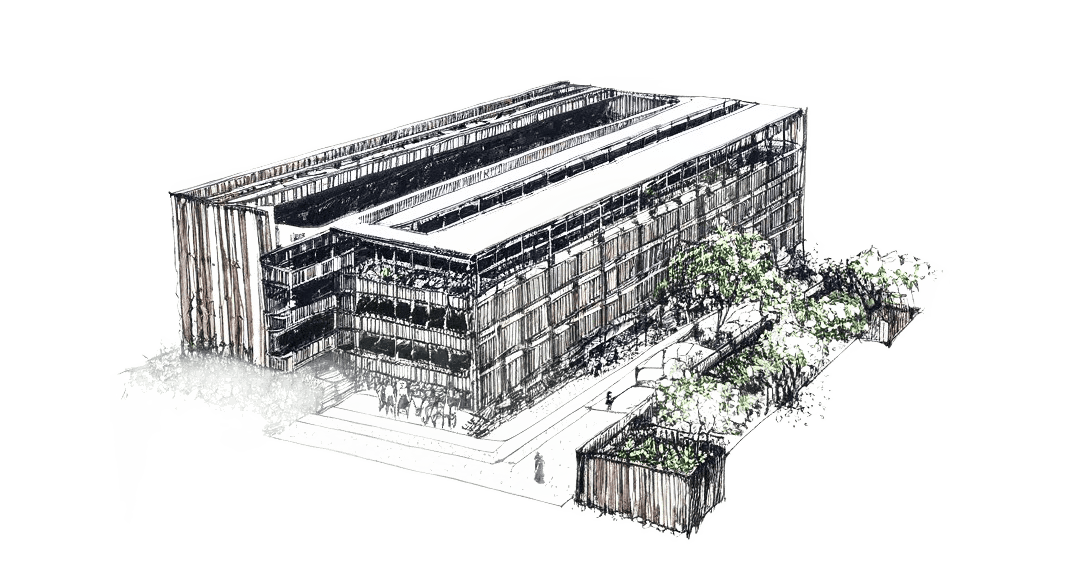
In the hollow stands the hall. Around it: green and wet ground. Above it, storey upon storey rises in layers while, like an alpine hut, the timber-and-earthy house settles on a stone base.
| more